


Newsletter September 2026
Welcome
Welcome to a new edition of our newsletter. I hope you will find, in each case, some of the articles informative.
There are many ways to communicate. Port of Hvide Sande continuously tries to communicate through social media and press releases, which both Dagbladet Ringkøbing-Skjern and Radio Klitholm are kind enough to share. This newsletter is probably still the focal point in relation to telling about big and small things at the Port. In this edition, we introduce a relay as something new, as it is also good to get input from our readers or some of those who look at Port of Hvide Sande from the outside. The editor in Hvidesande.by and artist Christian Estrup has taken the baton, and he passes it on to museum director Mette Bjerrum Jensen. If you have a viewpoint that concerns the Port, you are also welcome to send it to us.
Happy reading.
Mogens Pedersen
Port director
Offshore Wind
Vattenfall Wind Power won the tender for the offshore wind farm North Sea Mid. There were 2 bidders for the farm, which is to be operational by the end of 2032.
North Sea Mid will have a grid connection of 1GW, which corresponds to, for example, 67 turbines of 15MW each. (For comparison, Vesterhav South has 20 turbines of 8.4MW). However, it is allowed to "overplant" the area with more turbines if one can sell the power themselves and establish the necessary infrastructure for it.
North Sea Mid is located directly west of Hvide Sande from 20 up to approximately 50 km from the coast.
The offshore wind farm North Sea South is still out for tender, with a bid deadline of October 23, 2028.
North Sea South is to be established by the end of 2034.
At Port of Hvide Sande, we are pleased that a decision has been made regarding the first park and that it is a well-known and local actor who has won the rights to build it. This might give us more opportunities in the construction phase, as it is an actor who knows the port and the flexible frameworks we can provide. They are familiar with the navigation and our plans for 8 meters of water depth. This still does not provide enough depth for the wind turbines to be shipped from Hvide Sande, but projects such as scour protection (stones around foundations), cable installation, and not least site offices with crews, which are sailed in and out while the park is being installed.
The installation is expected to take place from around 2029/2030 until the park must be operational no later than the end of 2032.
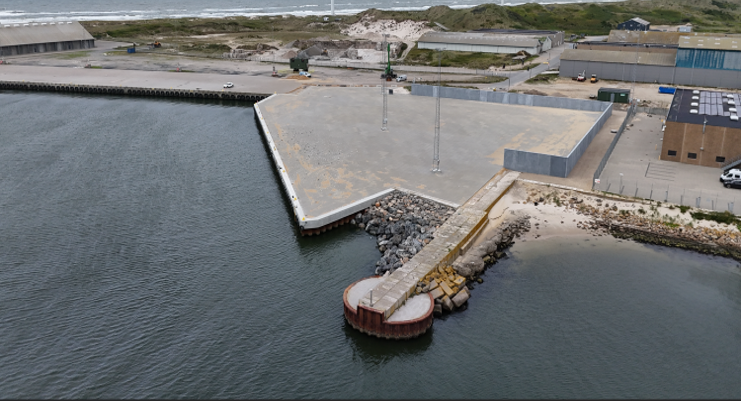
We are also pleased that our new quay 109 is now completed. We expect it can come into play, especially for the so-called SOVs (Service-Operations-Vessel) with crew during the installation of the foundations and the turbines themselves. In the meantime, the quay will also be an intended additional opportunity for our regular cargo activities, as the timing of ships can better distribute the vessels.
With the recently decided offshore wind farm and the remaining tender with a bid deadline in 2028, operators are also beginning to inquire about the possibilities for a heliport within reasonable driving distance from Hvide Sande. This is also a topic that other energy companies have discussed with us during the bidding phase. Two years ago, there was indeed a debate about the subject regarding a location in Hvide Sande, and when we put those plans on hold, we reported that we would have to look at opportunities elsewhere, even though the need for the number of flights is significantly lower than it was estimated in 2024.
Did you know that by 2026, nearly double the number of redfish have landed compared to 2025 until August.
What’s happening at the port
In March, we informed that the old lifeboat station at Nordhavnskaj will be demolished. This has caused some debate over the summer, but we have now received a demolition permit, so it will be torn down within a few months. Based on the summer's debate, a meeting has been held with the initiative group for the preservation of the lifeboat station, and there is agreement that efforts will be made to try to rebuild the lifeboat station elsewhere and then reuse suitable parts of the lifeboat station. During the demolition, suitable building parts will be stored until funding is found for a reconstruction. The location of a "new" lifeboat station has not been clarified.
The equipment terminal is exposed to wind and weather and requires ongoing maintenance. We have initiated renovation of the gable end and will continue the work in the coming time.
Port of Hvide Sande owns approximately 350 streetlights placed around the port area. In the near future, Ringkøbing Skjern Forsyning will replace relays and remove faults to ensure the light during the dark hours.
In order to beautify the area around the equipment houses at Tyskerhavnen, several tenants have been contacted about necessary renovations and cleaning around the equipment houses. This is exclusively tenants whose equipment houses are in need of some tender care or where objects have been placed that do not belong in the area.
The last holiday homes at Langsand are completed, and from the port's side, only planting with seaweed in the area around the houses is pending. This work will be initiated in September/October when Port of Hvide Sande has an agreement with Hvide Sande School, where students have the opportunity to earn money for various events.
At quay 15, 16, and 19 (south port), new fender covers have been purchased to improve conditions for the ships that are moored there. Rescue ladders in the area will also be replaced.
Quay 109
Quay 109 is now completed, and there was a handover on September 21, 2026. The project began in 2022 with an application to the Danish Transport Authority for a share in the then Harbor Fund, from which we were granted some funds.
The project has changed significantly since the original project description due to various technical challenges and improvement proposals that have arisen throughout the project.
The total rear area is now approximately 7000 m2 compared to the originally planned area of approximately 4000 m2. The design of the quay has also changed, which is due to challenges with driving sheet piling, where we encountered past work to close the navigation channel using concrete blocks weighing 10-14 tons, which are now lying on and under the harbor bottom at Nordre Sikring.
Quay 109 will positively contribute to both the port's and the city's development in the coming years, and it has been the most expensive construction project in approximately 15 years.
Inauguration of Quay 109
We invite you to the inauguration of Quay 109 on Thursday, October 22, 2026, at 12:00. The inauguration will take place at Quay 109, where we will mark the completion of the port's new quay facility.
Everyone is welcome – we hope to see many at a cozy and festive celebration.
Henning's Anecdote:
From a local pilot to modern piloting.
When I started at Port of Hvide Sande a couple of years ago, the conditions were quite different than today. There was only 4.5 meters of water in the entrance, and therefore it was not every day we received visits from the larger coasters. The pilot system was also different. One managed primarily with local knowledge, experience, and a person who knew the local conditions.
In Hvide Sande, we had what was called a "known man." This was a local fisherman and lifeboat captain with an intimate knowledge of the port, the currents, the shoal, and the narrow entrance. The known man was Kræ Mose. He was a calm and experienced man who knew the harbor and the entrance inside and out, better than most people know their own driveway. When a coaster approached the port, he sailed out in Mette Marie to meet it and help it safely through the entrance.
The term known man should of course be taken literally. It was a man who was known in the waters and who knew it like the back of his hand. The ship's captain could hire him to go onboard or sail ahead and assist with navigating through the local waters. Here, maps and markings were not always enough; one also had to know how the currents set, where the shoal lay, and how the entrance was on that particular day.
The known man thus functioned as a local pilot, long before piloting became the professional and regulated trade we know today. In other parts of Denmark, known men were gradually replaced by professional pilots, but in Hvide Sande, the tradition continued. That was perhaps also very natural. Here, conditions can change quickly, while experience takes many years to build up.
Kræ Mose was known for his calmness. I don’t think there was much that could throw him off course. This was a useful quality when having to go out to a foreign ship and lead it through a narrow entrance where there was not much room for mistakes.
Today, we have skilled, professional pilots, modern navigation equipment, and entirely different demands for safety and documentation. But the foundation is in reality the same as back then. The ship must enter safely, and the person showing the way must know the port. The difference is just that Kræ Mose did not need as many screens to see where he was. He knew the way.
It is important that we at the harbor keep ourselves informed about the conditions that ships face when entering and leaving Hvide Sande. Therefore, I had the opportunity to come with the pilot onboard when HILKE departed from Hvide Sande with the large elements bound for Spain.
The pilots from DanPilot have many years of experience as navigators at sea and undergo extensive training in the waters where they sail. But even though the equipment has become more advanced, one of the most important qualifications is still the same as in Kræ Mose's time: being able to maintain an overview and make the right decisions when there is no room for errors.
HILKE is not a ship that goes unnoticed. At 133 meters in length and a draft of 6.7 meters, it was one of the largest ships we have had pass through the entrance. Such a departure requires thorough planning, as both wind and tide play a crucial role. HILKE is not only large – it is also challenging to maneuver in the harbor basin. Therefore, a tugboat was called in to help turn the ship in place inside the harbor and later assist with the departure from the entrance.
A departure is not simply a matter of sailing out of the port. Water levels, wind, and weather play a role, and the pilot must have the overall overview. In addition to the cooperation with the ship's captain and crew, the effort must be coordinated with Port Control, line handlers, the tugboat, and the coast rescue station.
The departure was scheduled for high tide at 4:00 PM on July 1. The forecast indicated a water level of around 50 centimeters above normal tide, and with a depth of about 7.8 meters in the entrance, there was good clearance under the keel. Everything was therefore pointing to a smooth departure.
We were ready by 3:30 PM, but shortly before departure, the captain informed that the crew was not yet finished securing the cargo on deck. The large elements needed to be secured properly, and this work took longer than expected.
This was a small setback, but safety always comes first. The waiting time onboard was spent monitoring the development in the water level, which steadily fell towards the critical water level where we would have to cancel the departure. To ensure a large enough distance between the bottom and the keel, Port Control opened all sluices for inflow to ensure there was saltwater throughout the entrance and not fresh water. Saltwater has a greater density, and therefore the ship would float a bit higher in the water.
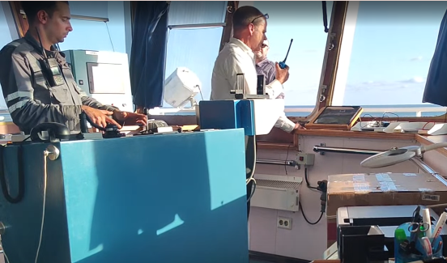
When the mooring lines were finally cast off in the correct order, coordinated with the line handlers, that part of the operation began that everyone had been waiting for. Slowly and controlled, HILKE was turned so that the bow faced out towards the entrance; an exciting job to follow, where the pilot, with the full overview, communicated with the ship's crew, the tugboat, and Port Control.
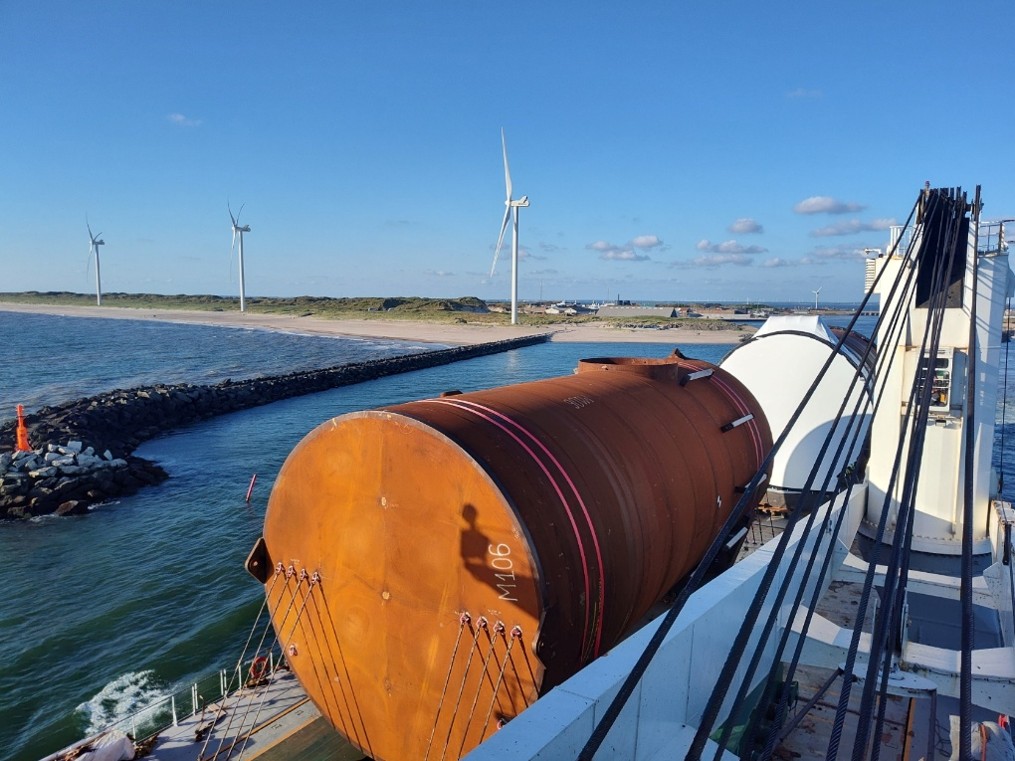
Small adjustments were made continuously to the ship's rudder, engine, and bow thruster, and the direction and pulling of the tugboat were adjusted so that the turn was carried out smoothly and safely. From the bridge, it was impressive to witness how precisely the pilot, the tugboat, the captain, and the crew cooperated. Despite the ship's size, it reacted calmly and controlled to the small adjustments that were necessary to bring the ship into the correct position.
As HILKE had its course out of the entrance, the pilot safely navigated the ship out through the jetties. The ship's crew followed the pilot's directions, and the tugboat held back to attain the correct steering speed.
Safely out of the harbor, we were picked up by the coast rescue station's FRB, which quickly sailed us back to the harbor.
One gains great respect for the craftsmanship the pilot performs and the experience that lies behind taking a ship of over 130 meters safely out of a harbor like Hvide Sande. At the same time, it is a reminder of how much planning, local knowledge, and cooperation is involved in every ship's arrival and every departure.
Much has changed since Kræ Mose sailed out in Mette Marie. But one thing remains the same: When a large ship must pass safely through the entrance, it requires a local collaboration where Port Control, line handlers, and the coast rescue station work together with the pilot as a unit! Safely, calmly, and professionally.
3,000 tons of elements for floating wind turbine foundations shipped through Port of Hvide Sande
As mentioned above, Stiesdal Offshore shipped seven components for a floating wind turbine foundation through Port of Hvide Sande during the summer. The elements weighed from 355 to 564 tons each, totaling 3,000 tons. They were sent out in two batches with MV Hilke, the largest cargo ship to have called at the port so far.
Two years of planning were necessary before the first ship docked
The collaboration between Stiesdal Offshore, transport company BMS with Torben Rafn, and Port of Hvide Sande started long before anything was loaded. The dialogue between the three parties lasted over two years.
The planning covered arrival and storage space for the elements, ranging from storage to quay, vessel size, and draft, clarified in dialogue with the pilot. There also needed to be control over safety conditions during loading and a communication plan for the media and the local area.
MV Hilke is a multi-purpose crane vessel, 133 meters long and 23 meters wide, with two cranes of 450 tons each and a tandem lift of 900 tons. The drafts at departure were 6.65 meters.
The collaboration with Stiesdal and the other partners on the project unfolded without complaint, and as Erik Dahl Andersen, Chief Engineer, Stiesdal Offshore puts it:
»We needed a reliable partner on the harbor side for the shipping of the very large and heavy elements. We got that in Port of Hvide Sande, which was a strategic partner from start to finish.«
Have you heard that in 2026, there have been the best prices for industrial fish at over 7 DKK per kg.
The Swing Bridge
Port of Hvide Sande really wishes to develop Sluseøen, and in 2025 we had a tender for the area – unfortunately without result. That might have been just as well since one of the important prerequisites in the tender was the construction of a swing bridge from the south side from the extension of Bredgade over to Sluseøen. The swing bridge will serve as a passage for pedestrians and cyclists. The swing bridge is being constructed by Ringkøbing-Skjern Municipality, which has received support from the EU's regional fund, the Business Promotion Board, Realdania, Danish Coast and Nature Tourism, and Port of Hvide Sande for the project.
Originally, the plan was for the swing bridge to be at quay height, but this would create too many problems concerning the overall sluice operations, especially for the smallest lifeboat, which must be able to exit quickly. Currently, it can pass unhindered under the flap bridge, and it would not be appropriate if it had to wait for manual handling before the swing bridge could open and the lifeboat could pass. Instead, the swing bridge will be at the same height as the flap bridge, so the lifeboat can pass unhindered under both the flap bridge and the swing bridge. The new height requires that staircases and ramps or lifts are established so that everyone can get up onto the bridge.
Port of Hvide Sande is part of the steering committee for the project, and the swing bridge is expected to be established in 2028.
The Initiative Fund
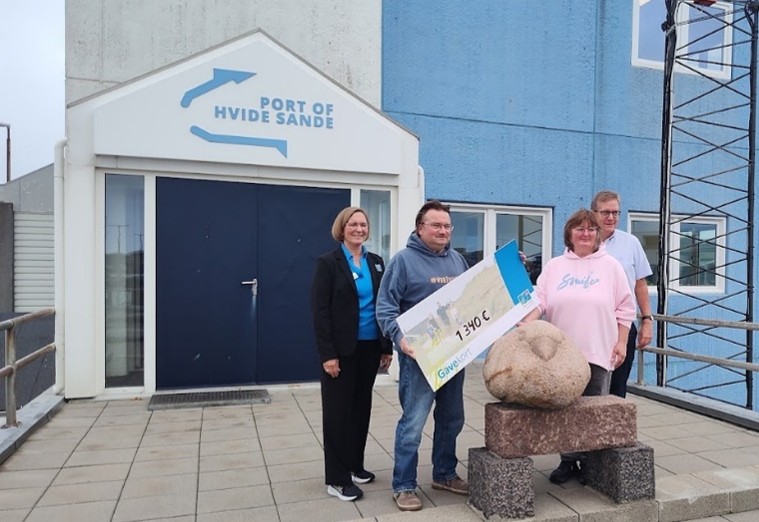
It is part of Port of Hvide Sande's strategy that we want to be the City’s Port. We receive so much help, support, and backing from the city, and therefore we also want to give something back. That’s why the board has decided to establish an initiative fund where good initiatives are rewarded. So, if you have a good idea, please send an application. The regulations for the initiative fund are as follows:
Port of Hvide Sande has established an initiative fund, where support from the port can be requested. Port of Hvide Sande wishes through the fund to contribute to us being the city's port. The following criteria must be met for receiving support:
The initiatives eligible for support must provide value for a larger group of citizens or guests in Hvide Sande.
There must be an activity that creates something new in the city.
Priority will be given to proposals that concern cultural or recreational initiatives or that in some way relate to Port of Hvide Sande's strategy, e.g., fishing, other maritime areas, climate, or sustainability in the form of activities that strengthen communities or are beneficial to children and young people.
The initiative fund is initially set at DKK 50,000, but may under special circumstances constitute a larger amount.
Applications must be sent to Port of Hvide Sande, mp@hvshavn.dk by November 24, 2026. Applications will be processed in connection with the board's meeting at the beginning of December 2026.
Environmental Ships
The areas at Port of Hvide Sande should ideally be a space where enterprising people can make things happen. There are numerous examples of this week after week - both large and small.
Many have seen firsthand that in recent months, several exciting ships have been undergoing repair or reconstruction at Hvide Sande Shipyard. This is positive for the city and the port, and it underscores that the harbor is a vibrant harbor. This has posed some challenges for sluice operations since some of the ships have been so large that they could only pass through when the water levels on the fjord side and the sea side were the same, and the flap bridge has intermittently had to be opened at an unusual vertical angle to ensure safer passage. It was also positive that in the middle of summer, it was announced that environmental ships for the Armed Forces will be built at Hvide Sande Shipyard, which is part of the project in a consortium with Karstensens Shipyard in Skagen and OSK Design. The rebuilding of the Armed Forces gives many new tasks to businesses across the country, and it is positive that this also benefits Hvide Sande, and one can hope that this will lead to even more tasks for the Armed Forces in the coming years.
For Port of Hvide Sande, this also presents new challenges, as we need to conduct dredging in Østhavnen to meet the depth requirements we have promised to the port's businesses. Fortunately, Ringkøbing-Skjern Municipality has been helpful, so we can utilize the sediments, which is both environmentally and economically advantageous.
Instagram Photo Contest
In collaboration with Esmark Holiday Home Rentals, we held a photo contest on Instagram over the summer, where we encouraged guests and locals to share their best pictures from the area.
The interest was overwhelming, and we received more than 150 fantastic photos. There were many beautiful motifs and atmospheric moments, so it was certainly not easy to select the winners.
After careful consideration, however, we have come to the conclusion about the two pictures that stood out a bit extra. A big congratulations to the winners and a huge thank you to everyone who participated and helped make the contest a success.
See the pictures here: Photo Contest | #myhvidesandehavn
Seize the opportunities but keep the port open
Christian Estrup
I write these lines at CoastWork; an office community established in the old Thorfisk on Rødspættevej.
The place is in many ways a good representation of the changes that have taken place at Port of Hvide Sande over the past generation: Where consumption fish was previously sorted, packed, and exported, the buildings today house a mix of surfers, filmmakers, and various smaller independent businesses primarily within health and leisure.
The changes around the harbor are rooted in a general, structural development where fishing occupies an increasingly smaller space, while tourism and experience economy fill much more.
As the undoubtedly largest landowner, Port of Hvide Sande is today privileged with a good, stable revenue base from the land leased to the three wind turbines of the district heating system; as well as the thriving urban tourism, which generates well for both holiday homes, apartments, and shops and restaurants.
If I were to point out a danger, it would be that the majority of development funds today are invested in offshore and industrial projects and infrastructure for cargo transport. This undoubtedly encompasses a significant economic potential, but I also hope that the Port will cater to trade and tourism. For example, through a visitor center that could be part of the future Fishermen's House. Such a center only makes sense if guests can later go out and experience the harbor themselves.
The fact is that the harbor in Hvide Sande has never been a backdrop. It must never become one either. That we have a working harbor, with the raw and unsightly aesthetics that follow, is, in my eyes, one of the strongest cards Hvide Sande has to play when it comes to our branding as a destination.
There should not be a choice between offshore, industry, and tourism. Things need to be balanced, and development must happen so that both we locals and our many guests can continue to experience a real harbor in the future. My greatest fear in this context is neither ugly buildings nor noise, but that large areas of the harbor may eventually end up being closed off.
Perhaps the most important thing is that we never forget our DNA: The harbor town did not arise after a plan: The Water Construction Authority wanted a sluice, not a town. But the pioneers and fishermen who followed after the sluice's opening in 1931 saw an opportunity on the narrow strip of sand between the North Sea and Ringkøbing Fjord and could seize it because the place was open and accessible: no one had shut them out. If the harbor of the future becomes too physically closed off, or too expensive to rent for new, exciting projects and initiatives, it will be precisely that instinctive, unplanned spirit of seizing opportunities that gets stifled.
Let me therefore end with the wish that we (also) in ten, twenty, and thirty years have a harbor with flourishing activity within offshore and industry, which is at the same time open and accessible—and with a ground rent that ensures that we can maintain our position as the best trading town on the West Coast.
Are you lacking space and a roof over your head for your project or cargo?
Port of Hvide Sande has various options for renting both outdoor areas and buildings for different purposes.
In the West Harbor, 1,000 m2 of bulk hall will be available as of February 1, 2027. The hall is approved and ready for bulk storage such as wood pellets, grain, road salt, biomass, or similar, which requires a large door, tipping height, and indoor storage. The hall is directly at the quay in the West Harbor and close to, for example, the bridge weight.
In the North Harbor, we have several buildings available for storage of various types of goods. It can also be harbor-related production. One of the buildings has tank capacity with environmental approval for, e.g., biomass. Another building at Fabriksvej 13 offers several possibilities for storage/production from 40 m2 to 800 m2. So if you need storage for fishing gear (or whatever your need may be), we can make a size that fits precisely to your need. Possibly even smaller than 40 m2. We rent out for both shorter and longer periods.
As something new, we have also created a dedicated area for indoor winter storage of pleasure boats.
Whatever your need for storage is, please contact Torben Lindberg Strømgaard from the port at phone number 23429521 or via email ts@hvshavn.dk
Remember that if you have suggestions for the newsletter, you can send them to mp@hvshavn.dk


